

By Peter Omopo
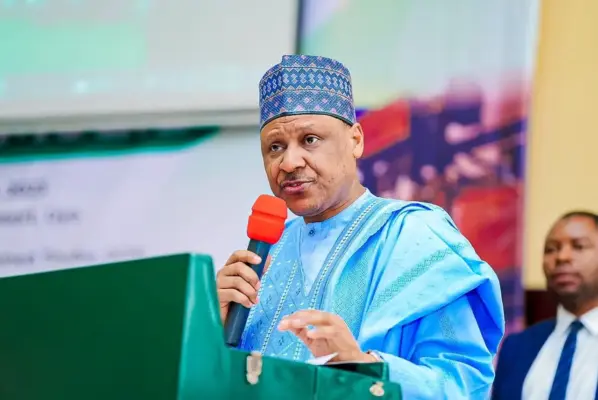
The Minister of Information and National Orientation, Mohammed Idris, has said that the economic reforms introduced by President Bola Ahmed Tinubu are stabilising Nigeria’s economy, restoring public and investor confidence, and placing the country on a sustainable path to growth after years of economic uncertainty.
Idris made the remarks during a virtual interview on ICAN On Air, a live programme of the Institute of Chartered Accountants of Nigeria (ICAN), streamed on Thursday.
According to the Minister, key policy decisions such as the removal of fuel subsidies and the unification of the foreign exchange rate were deliberate early actions by the Tinubu administration to address deep-rooted structural challenges that threatened Nigeria’s economic viability.
He explained that as of May 2023, many states were unable to meet basic obligations, including the payment of workers’ salaries, while a significant portion of national revenue was being consumed by debt servicing.
“You cannot build an economy on a faulty foundation. At the time, about 26 out of 36 states could not pay salaries, and nearly 97 per cent of government income was going into debt servicing. That path was not sustainable,” Idris said.
The Minister acknowledged that the reforms triggered short-term economic pressures but maintained that they were necessary to correct long-standing distortions and ensure that national resources benefit the broader population rather than a privileged few.
“These decisions were not politically convenient, but they were unavoidable. Without them, Nigeria was heading in the wrong direction,” he added.
Highlighting emerging gains from the reforms, Idris cited improvements in foreign reserves, easing inflationary pressures, and growing confidence among investors and international partners.
He disclosed that Nigeria’s foreign reserves have risen to about $46 billion, the highest level in nearly eight years, while headline inflation has begun to decline.
The Minister also described Nigeria’s recent removal from the Financial Action Task Force (FATF) grey list as a major boost to the country’s credibility, noting that it has improved access to global capital and strengthened Nigeria’s standing within the international financial system.
On tax reforms, Idris clarified that the government’s objective is not to increase the tax burden on citizens but to simplify the system, eliminate duplication, and broaden the tax base to enable more effective development planning.
“The tax reform is about efficiency and fairness. It is designed to bring those outside the tax net into it, not to make Nigerians pay more taxes,” he said.
Idris stressed that rebuilding trust remains central to effective governance and public communication, describing it as a core priority of his ministry.
“Without trust, you cannot build confidence, and without confidence, there can be no meaningful development. Our responsibility is to communicate government policies truthfully, transparently, and listen to feedback from Nigerians,” he said.
He added that President Tinubu consistently seeks feedback on policies and remains open to adjusting implementation where necessary, while staying firm on reforms critical to long-term national progress.
Addressing the challenge of misinformation, the Minister said the government is strengthening inter-agency collaboration and promoting media literacy to curb the spread of fake news without undermining freedom of expression.
“Fake news is dangerous. Media freedom is essential, but it must be exercised responsibly,” he said.
Idris also highlighted Nigeria’s successful bid to host UNESCO’s first Category-2 Media and Information Literacy Institute, which aims to equip citizens, particularly young people, with the skills needed to distinguish factual information from falsehoods.
Concluding, the Minister urged Nigerians to remain patient and engaged as the reform process continues, assuring that the full benefits would increasingly reflect in infrastructure development, education, healthcare and economic growth at the sub-national level.
“These reforms are deliberate and disciplined efforts. We are on the right path, and the signs of progress are already evident,” Idris said.
