

By Peter Omopo
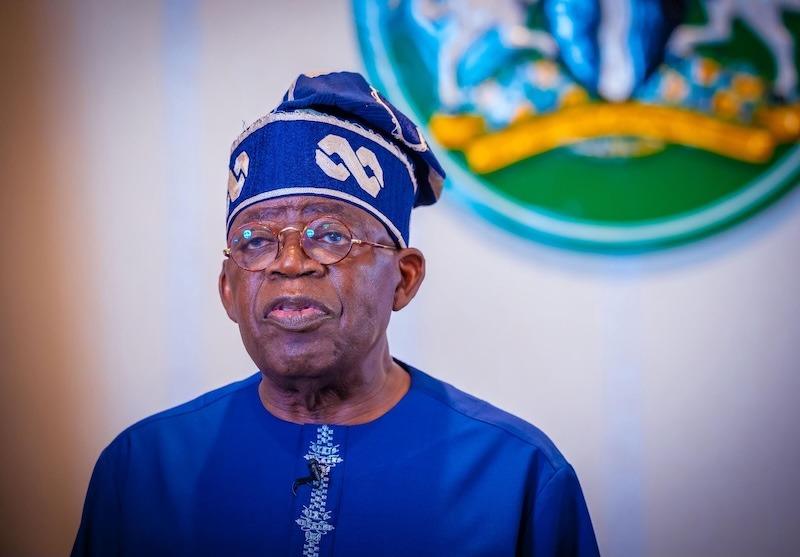
President Bola Tinubu on Sunday lauded the Nigerian Armed Forces for their decisive role in assisting Benin Republic following an attempted military coup.
The intervention came after a group of mutineers, led by Col. Pascal Tigri, seized Benin’s national television station early Sunday and declared the suspension of democratic institutions, claiming to have overthrown President Patrice Talon.
According to a statement signed by Tinubu’s Special Adviser on Information and Strategy, Bayo Onanuga, the Beninese government formally requested Nigeria’s military support in two separate communications. Acting on the request, Tinubu directed the Nigerian Air Force to deploy fighter jets and surveillance aircraft to secure Benin’s airspace and assist in dislodging the coup plotters from strategic locations, including the national broadcaster and a military camp. Ground troops were also deployed “strictly for missions approved by the Beninese Command authority in support of the protection of constitutional institutions and the containment of armed groups.”
Nigeria’s Chief of Defence Staff, General Olufemi Oluyede, confirmed that all operational requests were carried out and that Nigerian troops were already on the ground in Benin. “Ours is to comply with the order of the Commander-in-Chief of our armed forces, President Tinubu,” he said.
As Chairman of ECOWAS, Tinubu noted that the operation was in line with the bloc’s Protocol on Democracy and Good Governance. “Today, the Nigerian armed forces stood gallantly as defenders and protectors of constitutional order in the Republic of Benin, acting at the invitation of the government. They have helped stabilise a neighbouring country and made us proud of their commitment to sustaining democratic values and ideals since 1999. Nigeria stands firmly with the government and people of the Republic of Benin,” the President said.
Following the intervention, Benin’s authorities announced that the coup attempt had been suppressed and control restored, reaffirming the stability of the country’s democratic institutions.
