

By Peter Omopo
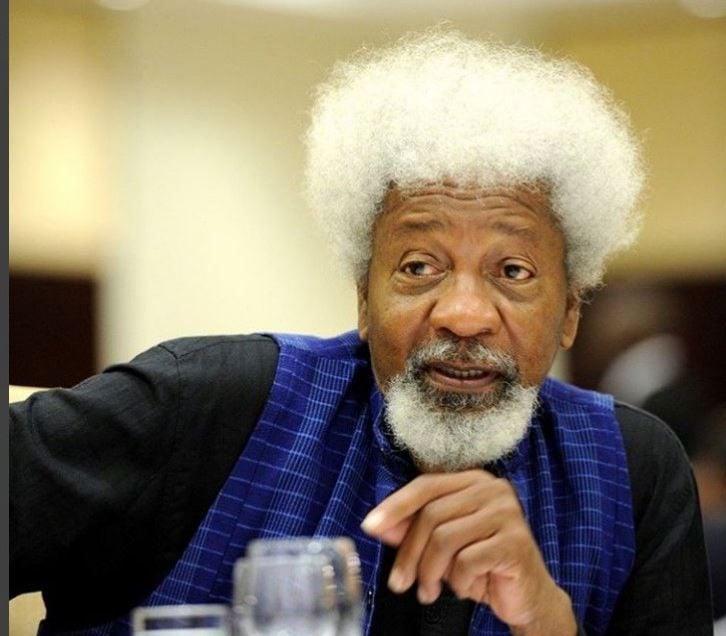
The United States Embassy in Lagos has defended its decision to revoke the visa of Nobel laureate, Prof. Wole Soyinka, stressing that entry into the country remains a privilege, not a right.
Responding to an inquiry from The PUNCH on Thursday, the US Consulate stated that visas could be withdrawn “at any time and at the discretion of the US government.”
“Visas are a privilege, not a right. Every country, including the United States, can determine who enters its borders. Visas may be revoked at any time whenever circumstances warrant,” the US Nigeria Mission spokesperson said in an emailed response.
While declining to comment on the specifics of Soyinka’s case, citing confidentiality laws, the spokesperson reiterated that US visa records are generally confidential, adding, “We will not discuss the details of this individual visa case.”
The clarification followed Soyinka’s public revelation on Tuesday that his B1/B2 visa had been revoked by the US Consulate General in Lagos.
During a press briefing titled “Unending Saga: Idi Amin in Whiteface” at Freedom Park, Lagos, the 91-year-old literary icon told journalists that he received a letter dated October 23, 2025, notifying him of the revocation.
“It is necessary for me to hold this press conference so that people in the United States who are expecting me for this event or that event do not waste their time.
I have no visa; I am banned, obviously, from the United States,” Soyinka said.
Soyinka, who once held professorships at several American universities, said he was unaware of any reason that could have prompted the decision.
“I’ve started looking back—have I ever misbehaved towards the United States? Do I have a history? Have I been convicted? Have I gone against the law anywhere?” he asked rhetorically.
Reflecting humorously, Soyinka recalled two decades-old encounters with US authorities — one involving a $25 fine at a Chicago airport for failing to declare green chilies, and another from the 1970s when he clashed with a police officer in Atlanta over racial discrimination at a hotel.
“These are the only two crimes I can consider myself guilty of in all the decades I’ve been going to the United States,” he said, dismissing them as unlikely reasons for the visa revocation.
According to the Consulate’s letter, Soyinka’s visa “has been revoked pursuant to the authority contained in the U.S. Department of State regulations 22 CFR 41.122,” adding that additional information became available after it was issued.
The letter also requested that he return the visa to the embassy “for physical cancellation,” a suggestion Soyinka jokingly said he might delegate to a volunteer.
First issued in April 2024, the revoked visa was for non-immigrant travel. The Consulate stated that Soyinka would need to reapply if he intended to travel to the United States again.
Soyinka, who won the Nobel Prize in Literature in 1986, remains one of Africa’s most prominent voices in global arts and activism. His visa revocation has stirred debate among observers who see it as part of the United States’ recent tightening of travel and immigration policies affecting African countries.
