

By Peter Omopo
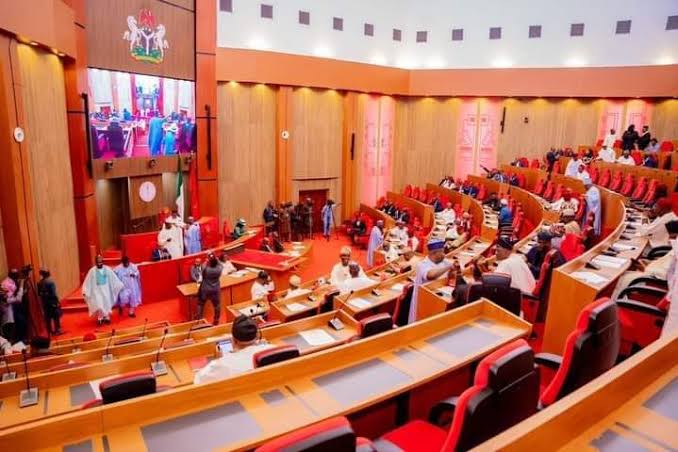
The Nigerian Senate on Thursday suspended deliberations on a bill seeking to repeal the Electoral Act 2022 and replace it with a new Electoral Act 2025, following calls for broader stakeholder consultations and deeper understanding of the proposed reforms.
The decision came after the Senate Leader, Opeyemi Bamidele (APC, Ekiti), moved a motion to stand down the debate, which was seconded by Minority Leader, Abba Moro (PDP, Benue). The motion was unanimously adopted at plenary.
Bamidele explained that it was not the right time for the upper chamber to proceed into an executive session on a bill with such wide-ranging implications, noting that lawmakers needed additional time to study and consult on the key provisions.
“There is a need for further consultations on the bill before proceeding. Senators must first understand the general principles and details before taking a position,” Bamidele said.
The bill, sponsored by the Chairman of the Senate Committee on the Independent National Electoral Commission (INEC), Simon Lalong (APC, Plateau), seeks to introduce what he described as a “comprehensive reform, repeal, and enactment” of Nigeria’s electoral framework — not a mere amendment to the existing law.
Lalong, a former governor of Plateau State, noted that while the Electoral Act 2022 introduced key innovations that improved election management, it also exposed several weaknesses in the system.
These, he said, included “delays in the release of election funds, disputes over voter registers, conflicting interpretations of electronic result transmission, numerous litigations from party primaries, and poor enforcement of electoral offences.”
“Nigerians expect not just corrections but a holistic law that will restore faith in the electoral process,” Lalong told his colleagues.
According to him, the proposed Electoral Act 2025 aims to strengthen INEC’s independence, promote transparency, and embed digital reforms such as continuous voter registration, electronic transmission of results, and digital voter registers embedded with QR codes.
He added that the bill would also establish stricter timelines and clearer rules for party primaries, candidate nominations, and replacements in cases of death or withdrawal.
“If enacted, the bill will restore public trust, reduce post-election disputes, and empower INEC to function without interference,” he said.
The Senate’s decision to suspend debate is expected to allow lawmakers time to engage with stakeholders — including political parties, civil society groups, and electoral experts — before the bill is reconsidered at a later date.
