

By Peter Omopo
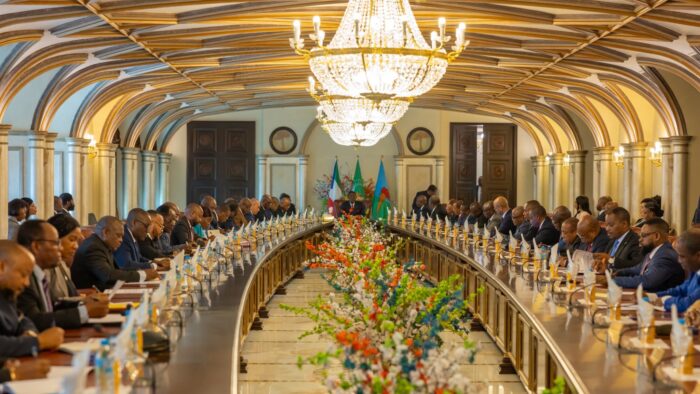
The government of Equatorial Guinea has resigned after failing to meet key performance targets set by President Teodoro Obiang Nguema Mbasogo, according to an announcement by Vice-President Teodoro Nguema Obiang Mangue.
Mangue disclosed the development in a statement posted on X, revealing that the cabinet stepped down after achieving only a small portion of the objectives assigned to it by the presidency.
According to the Vice-President, the administration delivered “barely 10 per cent” of its expected goals, a performance he described as inadequate given the resources placed at the government’s disposal.
He stressed that public office must be accompanied by measurable results, noting that significant human, material and financial resources had been allocated to address the needs of citizens.
While announcing the resignation, Mangue did not specify the exact benchmarks the government failed to achieve.
The development marks a major political shake-up in Equatorial Guinea, where President Mbasogo has remained in power since 1979, making him one of the world’s longest-serving leaders.
The outgoing cabinet, appointed in 2024, was led by Prime Minister Manuel Osa Nsue Nsua, a former governor of the country’s national bank. His administration was tasked with implementing economic reforms and improving living conditions, particularly for vulnerable populations.
However, nearly two years into its tenure, the government continued to face mounting economic challenges linked to declining oil production, reduced foreign investment and broader global economic pressures.
Despite being one of Africa’s leading oil-producing nations, Equatorial Guinea remains heavily dependent on hydrocarbons, with crude oil and natural gas accounting for the majority of government revenue and export earnings.
In a separate statement, the ruling Democratic Party of Equatorial Guinea said President Mbasogo had become dissatisfied with the administration’s performance, particularly its inability to effectively implement policies aimed at diversifying the economy and reducing dependence on the oil sector.
The resignation is expected to pave the way for the appointment of a new cabinet as the government seeks to accelerate reforms and address the country’s economic challenges.
